
The best Apollo alternatives in 2026, ranked by job
Eight Apollo alternatives, four lanes, and one honest note up front: Apollo sells a contact database with a sequencer built on top, and most of the tools ranked here sell a version of the same thing. Pricing was read from each vendor’s own page on 26 September 2026, with the source and the date on every figure. I built EaseClaw, which is not a database at all, so it sits in its own lane at the bottom of the list rather than competing on credits or database size.
I am Pritesh Mann, the founder of EaseClaw, and EaseClaw is the entry in the fourth lane on this list. I have not run the other eight tools myself. Everything about them comes from their own pricing pages and product pages, plus G2 and Trustpilot for public reviews, each read on 26 September 2026. Every price links to the page it was read from and carries that date.
Apollo itself is not ranked here: this is a page of alternatives to it, not a page that includes it as an option. Apollo’s own facts, used for comparison throughout, come from apollo.io/pricing and its G2 and Trustpilot listings, all read the same day.
One fact is carried over rather than re-checked: ZoomInfo’s own pricing and marketing pages returned an automated bot-verification wall on 26 September 2026, the same result as on the ZoomInfo alternatives roundup on this site, so its cost section below leans on a third-party pricing benchmark rather than ZoomInfo’s own numbers, and says so plainly. Hunter’s prices are shown on its own page as a discount off a higher standard rate, and that is disclosed as a live promotion rather than the standing price.
The nine, side by side
Entry prices, not promotional ones, except where a vendor’s own page showed no other figure. The rows run lane by lane, in the same order as the cards further down.
| Tool | Best for | Key capability | Price | Free tier or trial |
|---|---|---|---|---|
| ZoomInfo | Enterprise sales organizations who can absorb a five-figure annual contract and want the largest data footprint on this page. | The biggest named database of the group, with intent signals and org charts bundled into its sales product. | Not published; a third-party pricing benchmark reports a median of $33,500 a year | None found; its own site would not render a plan, price or signup flow for this read. |
| Cognism | Regulated industries and EU-heavy teams who need compliance guarantees more than a same-day self-serve signup. | Phone-verified records and compliance work bundled in, with 5 seats included on every plan rather than priced per head. | Not published; sold through a sales call, 5 seats included per plan | No free tier and no self-serve trial. Every plan starts with a call to Cognism's sales team. |
| Seamless.AI | Solo reps and small teams who want to try a live database with zero upfront commitment. | A free tier that never expires, so you can try a real search before ever talking to sales. | Not published; Pro and Enterprise are sold through a sales call | Yes: one user, 50 credits, no time limit on the tier itself. |
| Lusha | Individuals and small teams who want the lowest all-in entry price for verified contact reveals, no sequencer required. | The cheapest named starting price of either page, for anyone who wants verified reveals without a bundled sequencer. | $37.45 a month, billed annually (Starter) | Yes, 40 credits a month, no card required to start. |
| Hunter | Teams whose bottleneck is finding and verifying a work email, not phone numbers or a heavy multichannel sequencer. | The lowest priced entry point across either roundup, at $34 a month as a live promotion off $49. | $34 a month, shown as a discount off the standard $49 (Starter) | Yes, 50 credits a month, one connected email account, forever. |
| Clay | Technical teams who want to build a custom enrichment and outbound workflow rather than buy one vendor's fixed database. | Chains multiple data providers into one workflow instead of selling a single fixed database. | $54 a month, billed annually (Launch) | Yes, a free tier: 500 actions and 100 data credits a month, unlimited seats and tables, a 200-row limit. |
| Lemlist | Teams who already have a list, from Apollo or elsewhere, and want a sequencer with deliverability tooling built in. | One sequence across email and LinkedIn, with enrichment and intent signals priced as metered add-ons rather than bundled. | $55 a month, billed annually (Email plan) | A 14-day free trial, no credit card required; no ongoing free tier. |
| Instantly | High-volume email senders who want unlimited mailboxes and warm-up more than a phone or LinkedIn channel. | Unlimited connected email accounts and unlimited warm-up on every tier, including the cheapest one. | $47 a month (Growth, outreach only) | None found; the page's own free signup button led to a signup flow rather than a described free tier. |
| EaseClaw our product | A founder who wants a shortlist of warm buyers and a drafted invite, not a credit balance to manage. | Finds LinkedIn buyers from signals and writes to them itself; there is no list to build first and no credit balance to run out of. | $99 a month, one LinkedIn account per person | Free for 7 days on every plan, no card required. |
Each price in that table links the page it was read from. The full plan-by-plan table further down carries every tier, not just the entry one.
The four lanes
Most bad purchases in this category are lane mistakes: buying enterprise data when a $37 lookup tool would have done the job, or buying a sequencer when the real gap is that nobody decided who to write to in the first place. Pick the lane that matches the job before comparing a single feature.
The tools, lane by lane
One card per tool: what it does in the vendor’s own words, the entry price, who it fits, one real strength and one real weakness, each measured against what Apollo itself does. Every quote traces to the page linked at the foot of the card.
Best for enterprise contact data at scale
The largest named contact and company database of the group, sold across products like SalesOS, MarketingOS, TalentOS and OperationsOS, with intent signals and org charts bundled into the sales product. Its own pricing and marketing pages returned an automated bot-verification wall rather than a plan list when read on 26 September 2026, so nothing here is quoted from ZoomInfo's own site.
A contact database built around phone-verified numbers and compliance work for GDPR and CCPA, sold in two seat-bundled tiers, Standard and Pro, each including 5 seats before you add more. Every plan runs on a credit model, with add-on products for CRM enrichment and a volume-priced data feed sold on top.
A real-time contact search engine with a free tier that never expires, plus Pro and Enterprise tiers sold only through a sales call. Pro bundles an AI research assistant, data enrichment, an autopilot feature and buyer intent data as add-ons, and both paid tiers include unlimited CSV exports.
Best for budget-friendly contact lookups
A browser extension and CRM-integrated lookup tool, credit-based: revealing a verified email costs 1 credit, a phone number costs 5. The free tier runs 40 credits a month with no card required to start, and unused credits on monthly billing roll over up to twice the plan's monthly limit.
An email finder and verifier, not a phone number database: it finds and auto-verifies work emails, runs basic outreach campaigns, and connects one mailbox on its free tier. Its own pricing page shows a promotional price struck through the standard one on every paid tier as read.
Best for enrichment and outbound automation once you have a list
A workflow tool that chains together dozens of data providers in one enrichment pipeline, rather than selling one fixed database the way Apollo does. Tables run actions and spend data credits per row, with signal tracking, phone enrichment and email campaigns available from the Launch tier up.
An email-first sequencer that adds LinkedIn, SMS and WhatsApp automation on its Multichannel plan, with email warm-up and a deliverability hub shipping on every tier, even the cheapest one. Lead enrichment and buying-intent signals are sold as separate metered add-ons rather than bundled into the base price the way Apollo bundles credits.
An email-sending platform built around unlimited connected mailboxes and unlimited warm-up, even on its cheapest tier. Bundle plans add a database, uploaded-contact allowances and AI Sales or Reply agents on top of the outreach-only tiers, which stay focused on email volume alone.
Best for founder-led warm-buyer discovery
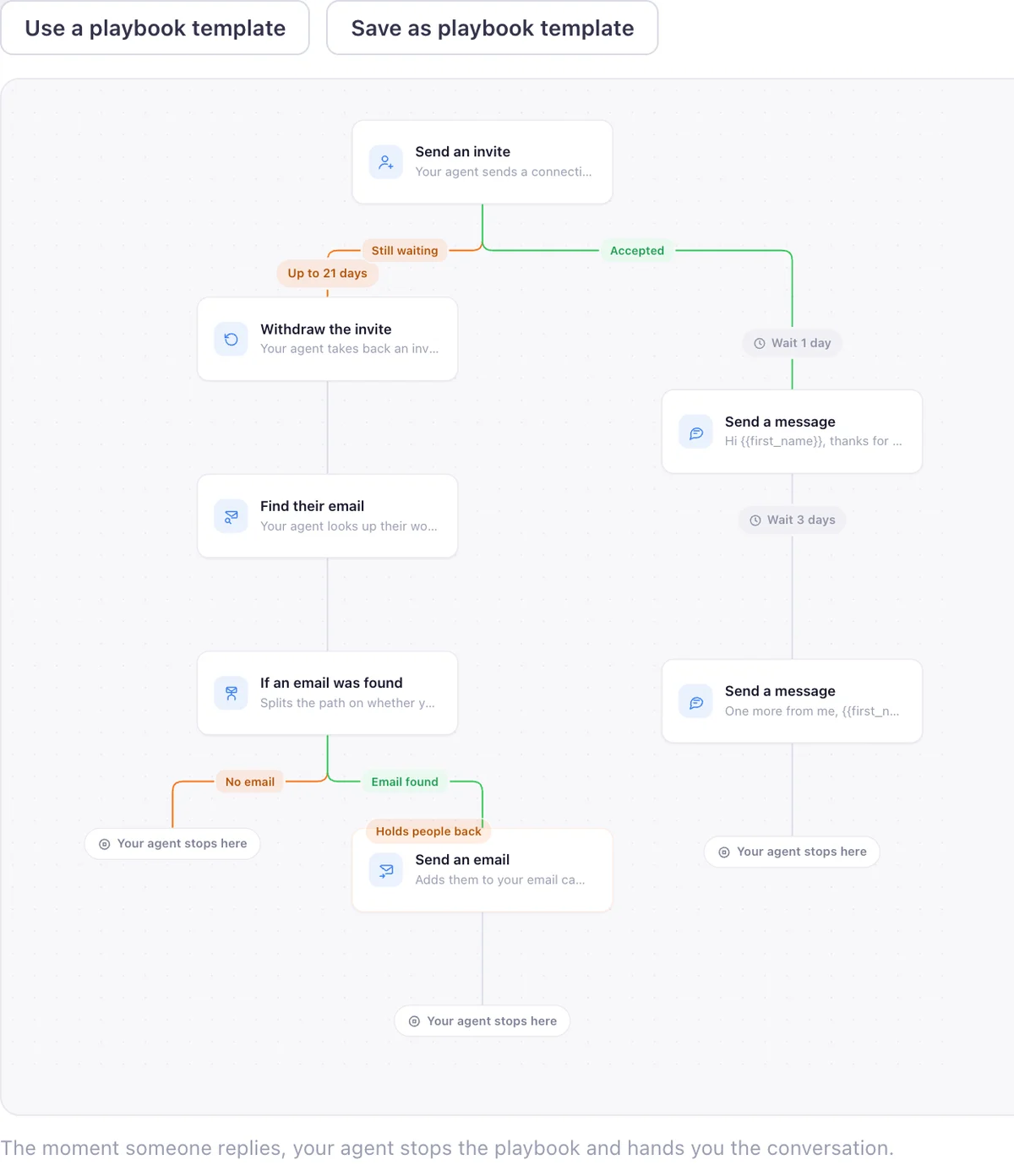
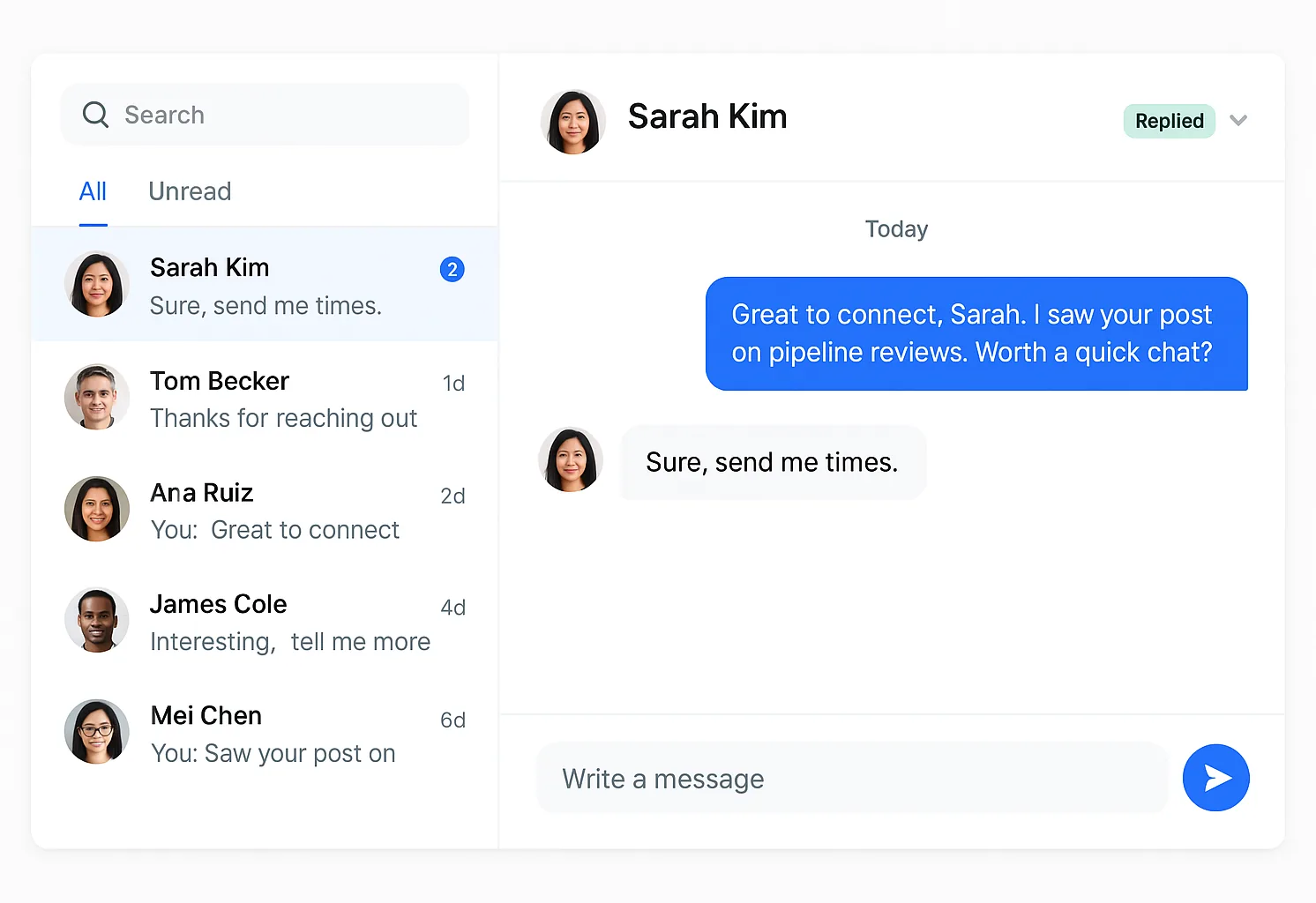
EaseClaw is not a contact database and it does not sell credits. Paste your website and the agent learns what you sell and who should buy it, then finds warm buyers on LinkedIn from buying signals: people engaging with a competitor's posts, people who just changed jobs, people asking for recommendations, companies hiring for the problem you solve. It writes the invite and the follow up in your voice, waits for the accept, then sends the first message, with every reply landing in one inbox.
If ZoomInfo is the tool you are actually weighing against Apollo, the ZoomInfo alternatives roundup covers that side by side, with the same G2 and Trustpilot comparison for both vendors. If your shortlist is really about warm buyers rather than a database at all, buyer intent signals explains the signals worth acting on, and LinkedIn cold outreach covers what to send once you have a name.
Every plan, every price
Every figure below was read on the date in its row, from the URL in its row, and every Apollo figure quoted for comparison in the cards above comes from the same page.
| Tool | Plan | Price | What it buys | Billing | Read on |
|---|---|---|---|---|---|
| ZoomInfo | Any tier | Not published | priced per seat count, platform and data volume, on a call | contact sales | 2026-09-26 |
| Cognism | Standard and Pro | Not published | 5 seats included, priced on a sales call | contact sales | 2026-09-26 |
| Seamless.AI | Free | $0 | 1 user, 50 credits | free | 2026-09-26 |
| Seamless.AI | Pro | Not published | annual credit packages, priced on a sales call | contact sales | 2026-09-26 |
| Lusha | Free | $0 | 40 credits a month | free | 2026-09-26 |
| Lusha | Starter, billed annually | $37.45 | per month, 400 credits a month | annual, billed yearly | 2026-09-26 |
| Hunter | Free | $0 | 50 credits a month, 1 connected email account | free | 2026-09-26 |
| Hunter | Starter | $34 | per month, shown as a discount off a $49 standard price, 2,000 credits a month | monthly | 2026-09-26 |
| Hunter | Growth | $104 | per month, shown as a discount off a $149 standard price, 10,000 credits a month | monthly | 2026-09-26 |
| Clay | Free | $0 | 500 actions a month, 100 data credits a month | free | 2026-09-26 |
| Clay | Launch, billed annually | $54 | per month, 15,000 actions a month, 3,000 data credits a month | annual, billed yearly | 2026-09-26 |
| Clay | Growth, billed annually | $185 | per month, 40,000 actions a month, 6,000 data credits a month | annual, billed yearly | 2026-09-26 |
| Lemlist | Email, billed annually | $55 | per month, unlimited users and senders | annual, billed yearly | 2026-09-26 |
| Lemlist | Multichannel, billed annually | $87 | per month, adds LinkedIn, SMS and WhatsApp automation | annual, billed yearly | 2026-09-26 |
| Instantly | Growth, outreach only | $47 | per month, unlimited email accounts and warm-up | monthly | 2026-09-26 |
| Instantly | Starter bundle, billed annually | $85 | per month, 5,000 emails a month, 1,000 uploaded contacts | annual, billed yearly | 2026-09-26 |
| EaseClaw | Pro | $99 | per month, one LinkedIn account per person | monthly | 2026-09-26 |
| EaseClaw | Business | $199 | per month, one LinkedIn account per person | monthly | 2026-09-26 |
ZoomInfo’s row is not a price: its own pricing page would not render for this read, so the row links a third-party pricing benchmark instead, the same one used on this site’s ZoomInfo alternatives roundup. Hunter’s rows show the promotional price it displayed on the day read, with the standard price it was discounted from named in the unit column.
What the ratings say
Four figures, each with its own source and the day it was read, rather than a number borrowed from somebody else’s listicle.
Is Apollo good?
By review volume, yes. Apollo’s own pricing page states a 4.7 out of 5 rating across 9,690 reviews, and an independent read of its G2 listing on 26 September 2026 lands close to that: 4.7 out of 5 across 9,834 reviews, among the highest review counts of any tool checked for either page on this site. Its Trustpilot score is lower, 3.1 out of 5 across 1,333 reviews the same day, and the reviews visible there skew toward frustration with the interface and the credit system rather than the underlying data itself.
That gap between a strong G2 score and a weaker Trustpilot one is not unique to Apollo. ZoomInfo shows the same pattern in the ZoomInfo alternatives roundup on this site: a 4.5 out of 5 on G2 against 1.8 out of 5 on Trustpilot. Read plainly, it suggests both companies serve verified enterprise buyers well enough to earn strong marks from people who evaluated the product carefully, while smaller accounts reaching for a public review site more often carry a pricing or usability complaint. Neither score cancels the other out; they measure different parts of the experience.
Where EaseClaw fits, and where it does not
Since I built one of these, here it is in the same words the rest of the site uses, so you do not buy it for the wrong job. EaseClaw is the AI agent that finds warm buyers on LinkedIn and runs outreach for founder-led B2B companies, without building prospect lists by hand. Built for founders and small B2B sales teams selling high-value products or services, especially when there is no dedicated SDR. It is not a database with a sequencer bolted on: there is nothing here to search, filter or export, and no credit balance to spend on a reveal. You paste your website, it works out what you sell and who should buy it, then finds those people through buying signals on LinkedIn: engagement on a competitor’s posts, a job change, someone asking for a recommendation, a company hiring for the problem you solve. It writes the invite and the follow up in your voice, waits for the accept, sends the first message, and keeps every reply in one inbox. Review every message, or let it run.
So if what you need is a searchable database and a sequencer you build campaigns in yourself, buy Apollo or one of the eight tools above it. If your list already exists and the job left is enrichment or sending, Clay, Lemlist and Instantly each do a piece of that. EaseClaw is worth your time in one specific case: you run one LinkedIn account, you do your own selling, and the part you actually want off your plate is deciding who is worth writing to and then writing to them, not searching a database or spending a credit to find out.
Questions
Which Apollo alternative should I actually buy?
Is Apollo good?
How much does Apollo cost?
Is there a free Apollo alternative?
What is the difference between a contact database with a sequencer, like Apollo, and an AI outreach agent like EaseClaw?
Do any of these tools work without a list you build yourself?
How were the prices on this page checked?
What EaseClaw looks like
Our product, so you can see what the agent actually runs. Screens from the real app with demo data, and one illustration, labelled as such.
What if you never had to build the list?
Paste your website. Your agent works out what you sell and who should buy it, finds those people on LinkedIn from buying signals, and writes the invite and the follow up in your voice. Seven days free, no card, then pick a plan to keep going.