The Warm Lead System for LinkedIn outreach
Your next customer commented on your competitor’s post this week. This is the system for reaching them first and booking the meeting.
 By Pritesh Mann, founder of EaseClaw. My agent runs this around the clock. It is free to run by hand.
Cold lists are dead math
- Buy a list of people who fit on paper
- Blast the same pitch at all of them
- 1 to 2 in 100 ever reply
- Your account and your name absorb the damage
- Find people already engaging with your competitors
- They named their problem, in public, this week
- One short message about what they said
- You are continuing a conversation they started
Point it at your competitors
- Pick 10 to 20 LinkedIn accounts your buyers follow. Competitors first: their commenters already have the problem, and often the budget. The agent picks these for you from your website; by hand, you list them.
- Any relevant post works as a daily source. New people engage every day.
- Open a competitor’s recent post. Click the comment count, then the reactions count.
- For every person, write down four things: name, headline, what they wrote, the post link. A sheet with four columns is enough.
- About ten minutes per post. Three posts a day and you have 30 to 60 fresh names by lunch.

Keep only real buyers
- Sellers out. Headline says “I help X get Y”? Skip.
- Real sentences only. Someone who described their setup or named a tool they hate just told you where they are.
- Short list, real people. Message only the ones who told you where they are. Twenty real buyers beat two hundred names.
- ✓They have the problem, not a listicle about it
- ✓They are deciding, not venting into the void
- ✓They engaged in the last few days
- ✓You can solve their exact case, and say how
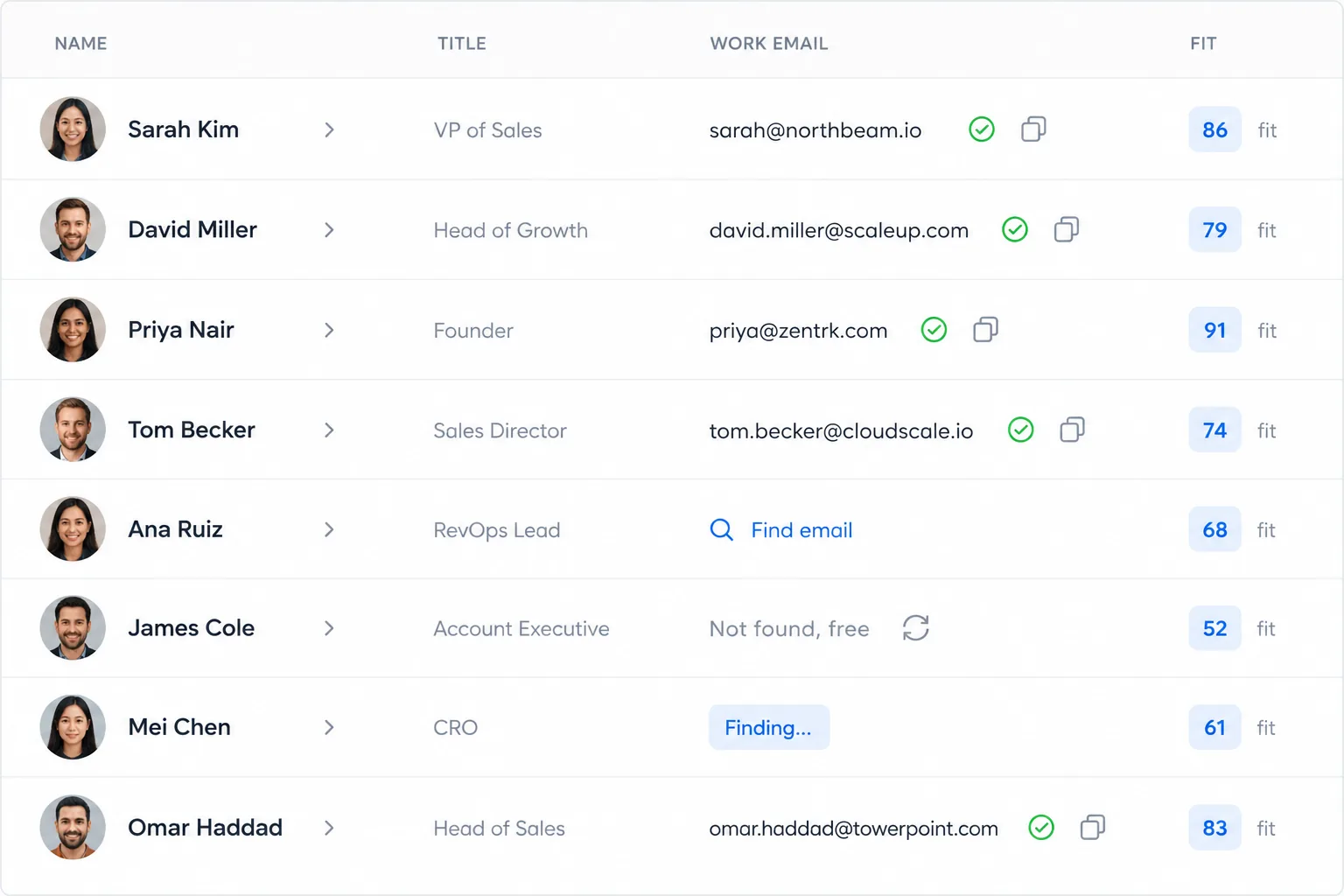
One real afternoon of ours. 756 people in, 27 conversations worth starting.
One play, two touches
- Invite, no note. LinkedIn rations notes and accept rates barely move. Save the personalization.
- Then one message about what they actually wrote. Not the post. What they said.
- A handful of warm invites a day beats a hundred cold ones. Warm and few is the whole point.
No links. No pitch. A question they actually want to answer. Four more scripts below.

Measure the funnel, fix the weak step
- Track four numbers: invites → accepted → replied → meetings.
- Low accepts? Wrong audience. Accepts but no replies? Wrong message. Change one thing, not five.

Six messages that carry the whole play
Every one of these is a message we have actually sent. Swap the specifics, keep the shape: their words first, one question, no pitch until they ask.
Three prompts that write like a person
Paste these into any AI model. They are written for the rules above, so the output references what the person said, never the fact that you saw them say it.
These are the same rules the agent writes with. The difference is that it runs them for every new engager, every morning.
By hand this is an hour a day, forever
Engagement decays in hours and skipped days do not bank. Most people quit in week two. That is exactly why I built an agent that runs the whole loop instead:

Finds your competitors, then the hand-raisers
Reads your website, finds the competitors your buyers follow, and watches their pages plus 12 platforms around the clock. Add your own any time.

Writes in your voice
Drafts the invite and the follow-up from what each person actually said.
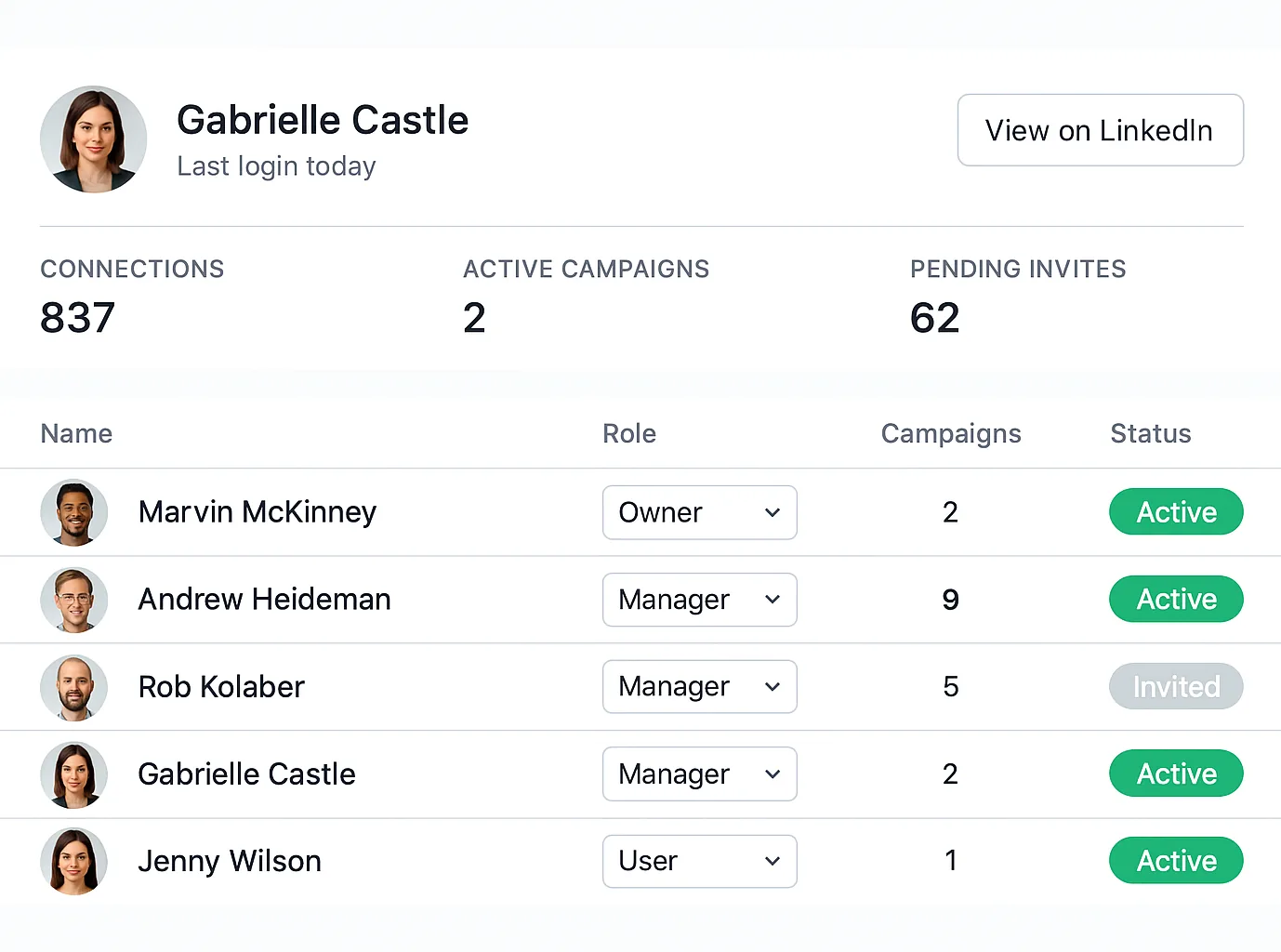
Sends within your limits
Human pace, working hours and daily limits you set. Review each send, or let it run.
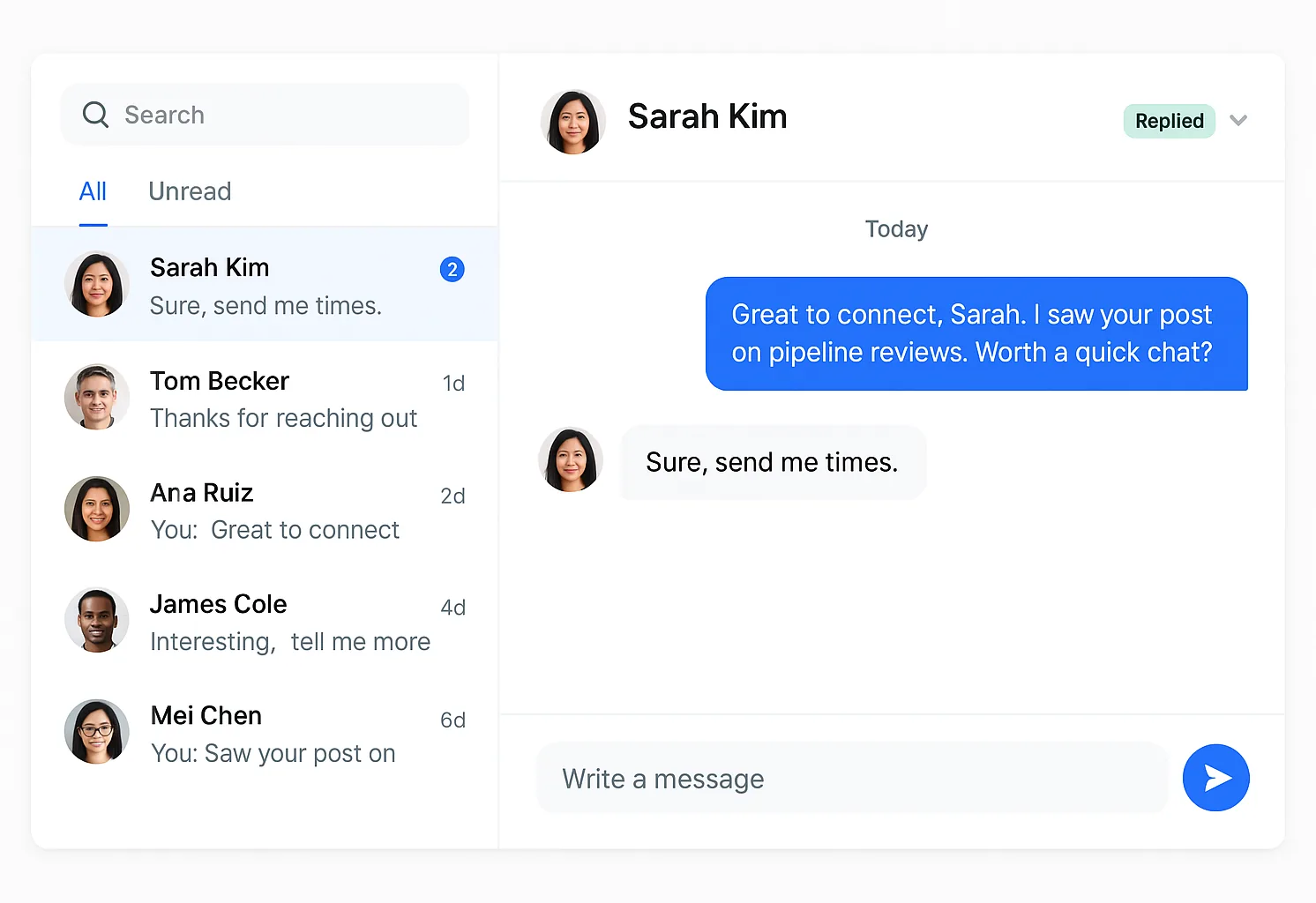
Replies land in one inbox
Accepted, replied, meeting booked. You step in when it gets human.
Never posts to public feeds · never sees your LinkedIn password · limits you set, always on
Your next 48 hours
Start the trial and paste your site. The agent maps your buyers, finds your competitors, and builds your first campaigns on its own. Add any competitor you want on top.
Open the queue, edit anything you would say differently, connect LinkedIn. The first invites go out inside your limits.
Accepts and replies are in the inbox. Book the first call, then decide if you keep the agent.

Your first campaigns, built for you on day one
Paste your site. The agent maps your buyers, finds your competitors, builds your first campaigns, and reaches out within limits you set once you connect LinkedIn. No list to build, nothing to configure.
Start free trial7 days free · no card · review every message, or let it run